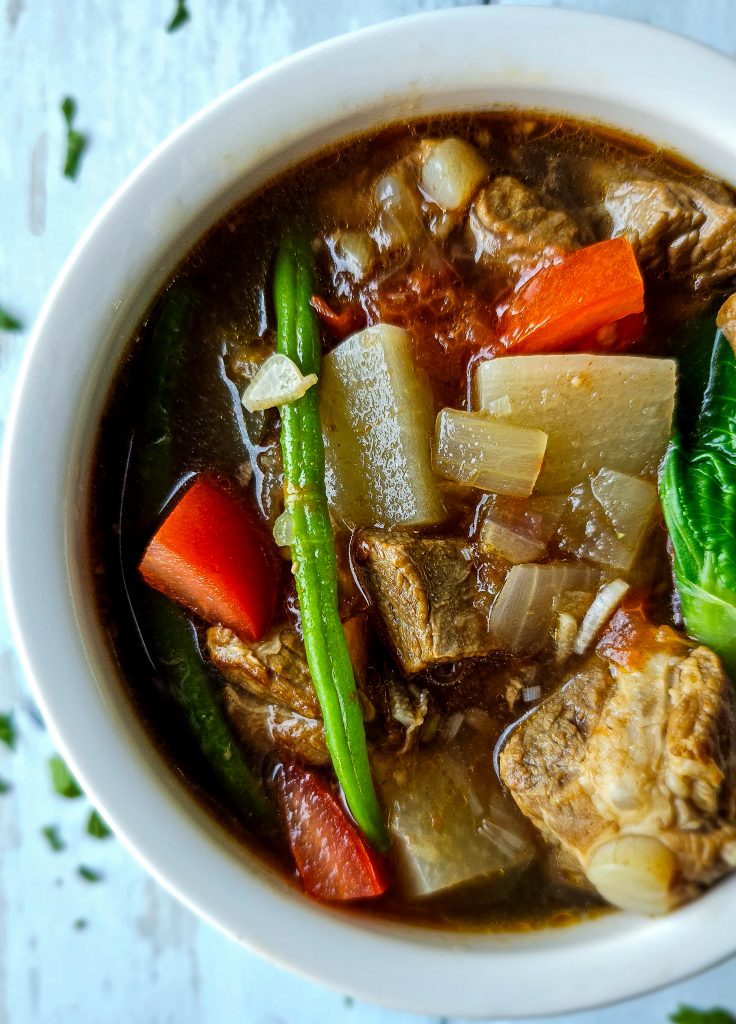
What is Filipino Kare Kare?
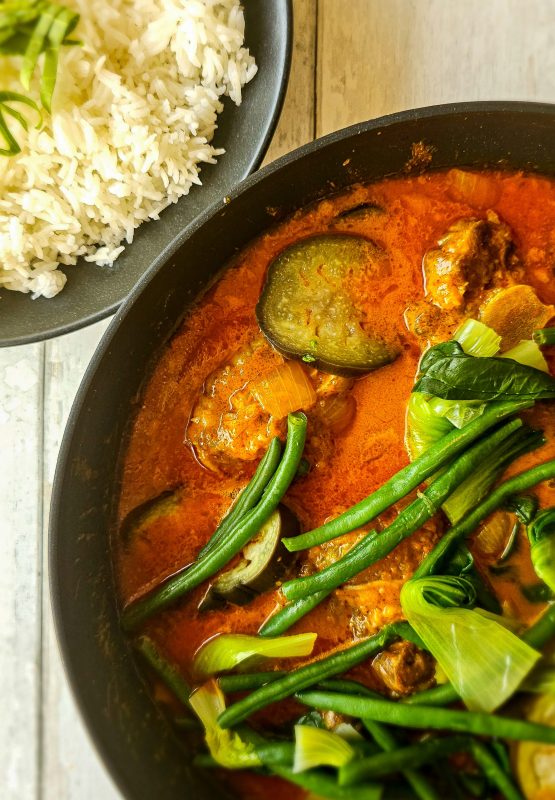
Kare Kare is a quintessential Filipino stew, celebrated for its rich peanut-based sauce. It traditionally includes oxtail, tripe, or pork, alongside vegetables such as eggplant, banana heart, and string beans. The dish is often finished with bagoong, a savory shrimp paste that enhances its distinctive flavor.
Kare Kare is a beloved dish in Filipino culture, especially during big celebrations like fiestas, weddings, and family reunions. It symbolizes unity and abundance. Families often prepare the dish together, each member helping out, which strengthens their bond. Certainly, it is no surprise that this dish is considered one of the top 10 in Filipino cuisine.
Sharing Kare Kare with family and friends enhances the festive mood and highlights the Filipino value of kapwa, or connectedness.
A Step-by-Step Guide to Serving Kare Kare
Serving Kare Kare is as much about presentation as it is about taste. In short, here’s how to serve this delicious stew:
- Choose a Large Dish: Transfer the cooked dish into a large, deep serving bowl. The stew’s vibrant colors and tender meat look inviting in a big dish
- Arrange Vegetables: Place the leafy greens, eggplants, and string beans neatly on top. These add color and showcase the fresh ingredients
- Side of Shrimp Paste: Offer fermented shrimp paste (bagoong) in a small dish. This lets each person customize the flavor
- Provide Steamed Rice: Serve it with a bowl of warm rice. The rice balances the stew, absorbing the rich peanut sauce.
- Add Garnishes: Finish with sliced chilies and crushed peanuts. These add extra flavor and texture
Additionally, you might like to explore extra side dishes, such as:
- Pickled Vegetables: The acidity and crunch of pickled vegetables such as atcharang papaya provide a refreshing contrast
- Grilled Fish or Meats: Grilled dishes like inihaw na baboy (grilled pork) or inihaw na isda (grilled fish) are popular choices
Enjoy the rich, festive flavors!
Kare Kare Across Borders: A Global Comparison
Exploring global cuisines uncovers interesting similarities and unique features.
- Kare Kare’s blend of oxtail and rich peanut sauce finds a parallel in Thai Massaman Curry. Both dishes use creamy peanut sauces. However, Massaman curry has spices like cardamom and cinnamon for a richer flavor, while the Filipino version has a simpler taste.
- When compared to African Groundnut Stew, both dishes use peanuts. However, the African stew includes tomatoes and sweet potatoes, adding sweetness not found in Kare Kare. This shows regional differences in flavor and ingredients.
- With Indian curry, the comparison highlights the use of many spices in Indian dishes, creating complex flavors. Both Kare Kare and Indian curries are comforting stews, but their spice levels and aromas differ, offering unique culinary experiences.
- Finally, looking at Indonesian Satay, which also uses peanut sauce, we see more differences. While both highlight peanuts, Filipino dish focuses more on the meat’s texture, unlike the grilled, skewered approach of Satay. This shows the diverse interpretations of peanut dishes worldwide.
Kare Kare vs. Thai Massaman Curry: A Flavor Showdown
Flavor Profile: Kare Kare features a thick, savory peanut sauce with a nutty flavor. It includes oxtail, tripe, or beef, along with vegetables like eggplants and banana blossoms. Also, it’s typically served with bagoong (fermented shrimp paste) on the side, adding a salty kick.
Thai Massaman Curry combines sweet, savory, and mildly spicy flavors. Coconut milk, peanuts, and spices like cardamom and cinnamon create a creamy base. It’s often made with chicken, beef, or lamb, simmering with potatoes and roasted peanuts.
Ingredient Diversity: Both dishes feature peanuts, but they differ in supporting ingredients. Kare Kare relies on local vegetables and Filipino flavor enhancers like bagoong. Massaman Curry uses a variety of spices and coconut milk, creating a rich and subtly spicy dish.
Cultural Context: Kare Kare is important in Filipino culture, often served during family gatherings. Its preparation reflects Filipino values of togetherness. Massaman Curry shows Thailand’s skill in blending local and foreign influences, making a classic and exotic dish.
In summary, despite both using peanuts, Kare Kare and Thai Massaman Curry offer unique experiences.
Kare Kare vs. African Groundnut Stew: A Culinary Exploration
Kare Kare and African Groundnut Stew both have a nutty flavor but are different in their cultural backgrounds. The Filipino version features a thick peanut sauce with tender meats like oxtail or tripe. It also includes vegetables like eggplant and string beans. Most importantly, a key ingredient that gives it a unique Filipino taste is bagoong – fermented shrimp paste.
On the other hand, African Groundnut Stew, known as Mafé in West Africa, uses peanuts with chicken or beef, spiced up with various seasonings. Tomatoes add a tangy taste, making it different from the slightly sweet Kare Kare. Also, some versions include chilies for extra heat.
These dishes showcase a love for peanuts and culinary creativity worldwide. While both dishes highlight the global appeal of peanut-based stews, Kare Kare’s bagoong gives it a Filipino flair.
How does the taste of Kare Kare compare to Indian curry?
Kare Kare and Indian curry, although both tasty and intriguing, offer unique flavor profiles for different taste buds. Kare Kare features a rich, nutty flavor, thanks to its peanut-based sauce. The combination of oxtail, tripe, and vegetables creates a hearty and mild experience, with low spice levels.
In comparison, Indian curry shines with its complex mix of spices, offering strong flavors and often a spicy kick. Different Indian regions use spices like cumin, coriander, and turmeric to create their distinctive aromas and intensity.
While Filipino version delivers a comforting richness from peanuts, Indian curry stands out with its bold, aromatic spices. Though different in their core flavors, both dishes masterfully layer ingredients to create a delightful dining experience.
How does Kare Kare compare to Indonesian Satay in terms of flavor?
Although Kare Kare and Indonesian Satay both use peanut-based sauces, they taste quite different. Kare Kare features a rich, savory flavor with peanut butter’s nuttiness and a touch of sweetness. Adding bagoong (fermented shrimp paste) increases the complexity, achieving a well-rounded taste.
On the other hand, Indonesian Satay offers a bold flavor with a hint of curry. The peanut sauce contains garlic, chili, and sometimes coconut milk, giving it a sweeter and slightly spicier taste. Satay is often grilled, adding a smoky touch to the succulent meat skewers.
In essence, Filipino dish provides a milder, savory experience, while Satay excites with its vibrant, spiced sweetness.
How do regional variations of Kare Kare differ within the Philippines?
Here’s how Kare Kare varies across the different regions of the Philippines:
- Luzon: Known as the home of traditional version, Luzon uses oxtail, beef tripe, and sometimes ox feet. The region sticks to the classic, rich peanut sauce.
- Visayas: In the central Philippines, seafood like prawns, mussels, and squid often take the place of beef, giving the dish a coastal touch. Sometimes, cooks add coconut milk for a slightly sweet flavor.
- Mindanao: This region loves bold, spicy flavors. Here, chefs might add spicy chilis to bring heat that contrasts with the mild peanut sauce. Also, some versions even blend flavors from other Asian cuisines.
- Pampanga: From the culinary capital, this version follows tradition closely. Its hallmark is a meticulously prepared sauce, ensuring a velvety, rich consistency.
These regional variations show how it can be customized while showcasing the diverse nature of Filipino cuisine.
Pairing Options: Best Drinks to Complement Kare Kare
For the best dining experience with Kare Kare, the right drink can enhance its unique flavors. The dish’s rich, nutty taste pairs well with drinks that either contrast or boost its complex profile.
- Tropical Fruit Juices: Mango or calamansi juice provides a sweet and tangy taste, refreshing the palate and balancing Kare Kare’s savory notes.
- Light Beers: A crisp light beer complements creamy texture of the dish with a subtle bitterness that balances its richness.
- White Wine: A chilled Sauvignon Blanc or Pinot Grigio adds a touch of acidity and fruity notes that highlight the dish’s umami flavors.
- Traditional Filipino Drinks: Sago’t Gulaman, with tapioca pearls and jelly, offers a sweet contrast to the savory stew.
- Iced Tea: Simple iced tea with a hint of lemon cuts through the dish’s richness with a fresh, clean taste.
What are the health benefits of Kare Kare?
Kare Kare is not only delicious but also offers health benefits thanks to its nutritious ingredients:
- Rich in Protein: Beef and oxtail are great for muscle building and repair.
- Heart Health: Vegetables like eggplant and leafy greens add fiber and antioxidants for heart wellness.
- Packed with Nutrients: The peanut sauce contains healthy fats, Vitamin E, magnesium, and potassium.
- Boosts Immunity: Garlic and onions in the recipe help fight infections.
- Digestive Health: Vegetable fiber promotes regular digestion.
In summary, eating this dish gives you comfort and a nutrient-rich meal. Enjoy its flavors and health benefits mindfully.
What are the key ingredients in Filipino Kare Kare?
Filipino Kare Kare is highly regarded for its depth of flavor and unique combination of ingredients:
- Oxtail – traditionally used for its gelatinous texture and deep flavor (optional variations such as tripe or pork hocks add complexity)
- Peanut sauce – the heart of Kare Kare, made from ground roasted peanuts or peanut butter for a distinctive nutty flavor
- Toasted rice powder – acts as a thickening agent and adds a subtle, earthy note to the sauce
- Annatto seeds or annatto oil – imparts a vibrant orange hue and a mild, peppery flavor
- Vegetables include:
- Banana blossoms
- Eggplant
- String beans
- Bagoong (fermented shrimp paste) – traditionally served alongside to balance the stew’s richness with its salty and umami contrast.
What is the historical origin of Kare Kare in the Philippines?
The origins of Kare Kare are as rich as its taste. One theory suggests the dish comes from the Kapampangan people in Pampanga, known for their excellent cooking. Another theory says Indian soldiers, during the British occupation of Manila in the 18th century, introduced a curry-like dish that became Kare Kare.
Some believe the Moro people from southern Philippines also contributed to Kare Kare. With their cooking style, they may have used peanuts and slow-cooked meats, influencing the dish’s creation. This shows the mix of cultures shaping Filipino food over time.
Kare Kare also evolved through local ingredients and adapting foreign influences. For example, using peanuts might aim to mirror Indian curry’s creaminess, while adding bagoong gives it a Filipino twist, boosting flavor depth.
Stories suggest a mix of local and foreign elements influenced Kare Kare. Its name and some features hint at Indian roots, possibly relating to the dish ‘kari-kaari.’ Also, the other theory says the name ‘Kare Kare’ likely comes from ‘curry,’ although it differs from spicy Indian or Southeast Asian curries.
With its mild, nutty taste, Kare Kare stands unique, showcasing the Philippines’ history of cultural exchange and culinary adaptation.