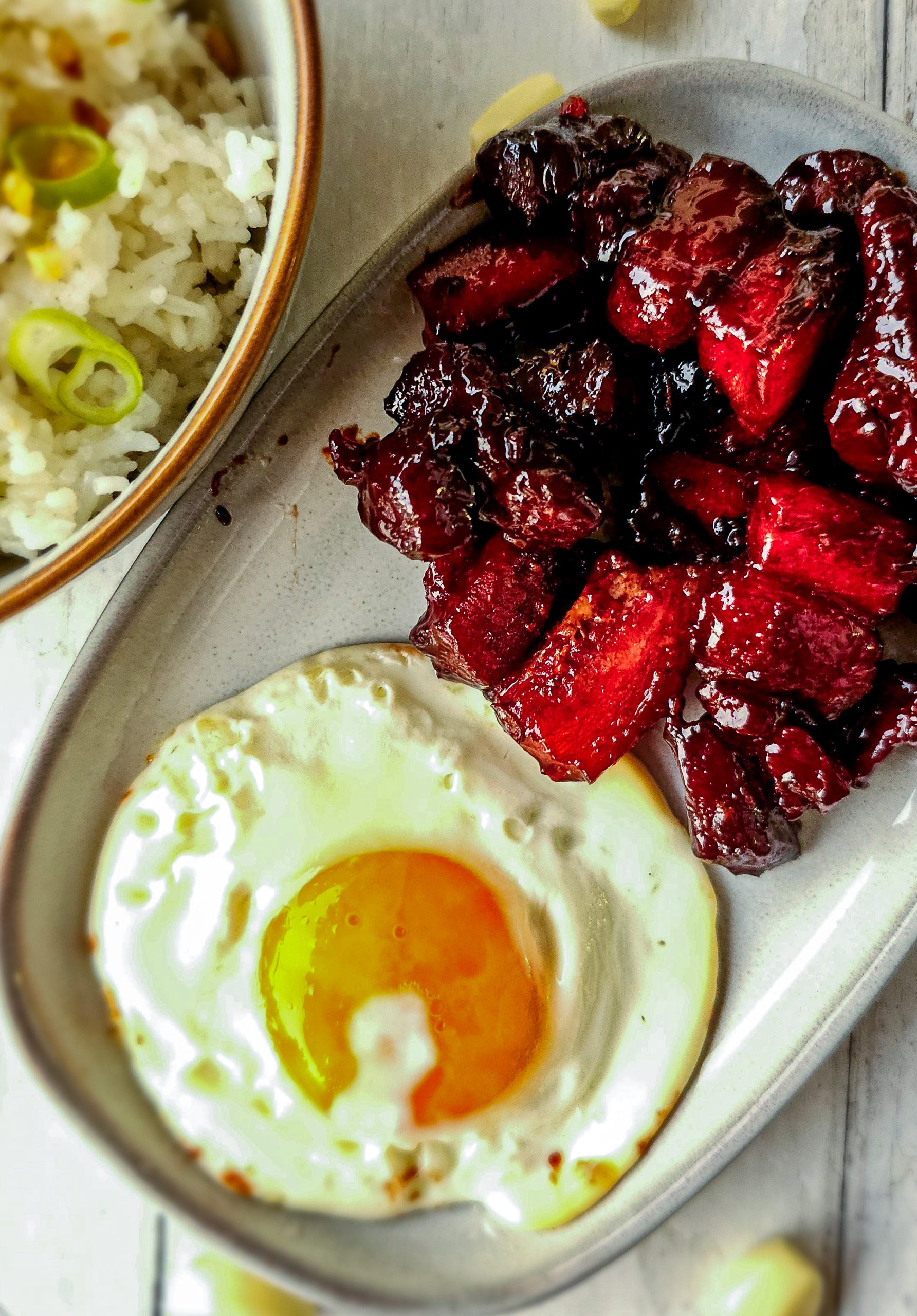
What Is Filipino Tocino?
Tocino is a favorite in Filipino meals, celebrated for its sweet and tender taste. This sweet-cured meat, usually pork, holds a special place in Filipino culture and is a popular breakfast option. However, it can also serve as a main dish for lunch or dinner.
To make it, you marinate the pork with sugar, salt, and spices. This gives it a rich, caramelized crust when cooked.
Tocino often appears red, which comes from annatto seeds or food coloring. While pork is the usual choice, you can also use chicken or beef for a tasty twist.
Serving Filipino Tocino: A Guide To Enjoying This Delight
Typically enjoyed for breakfast, Tocino pairs wonderfully with a variety of sides.
- Rice Pairings: Pair it with garlic fried rice, or sinangag, is a classic choice.
- Egg Combinations: For a hearty meal, try adding a sunny-side-up or scrambled egg. The creamy, rich egg texture enhances the taste, making it an ideal way to jumpstart your morning.
This is where we need to mention Tocilog or Tosilog. This tasty meal includes combination of Tocino, garlic fried rice, called sinangag, and a sunny-side-up egg or itlog. The garlic in the rice and the creamy egg contrast perfectly with the sweet-savory Tocino,
- Pickled Vegetables (Atchara): Serve with atchara, a tangy and sweet pickled papaya, to cut through the meat’s richness and refresh your palate.
- Fresh Tomatoes or Sliced Cucumber: Fresh tomato or cucumber slices provide a refreshing contrast and lighten up the meal.
- Vinegar Dip: Mix vinegar with crushed garlic and chili for a zesty dip
Exploring The Nutritional Aspects Of Filipino Tocino
The nutritional aspects of Tocino can be quite insightful, especially for those mindful of their dietary intake. Consider the following health aspects:
- High in protein, which supports muscle growth and repair
- Can be high in fat, especially saturated fats, important for those monitoring cholesterol levels
- Contains sodium due to the curing process, contributing to its unique flavor and helping with preservation
- An excellent source of energy given its carbohydrate content from sweeteners
When consuming this traditional dish, moderation is key. Pairing it with fiber-rich foods like brown rice or vegetables can help create a more balanced meal.
Additionally, for health-conscious eaters, exploring leaner meat options or plant-based version may offer satisfying alternatives with reduced fat and calorie content.
Tips For Cooking The Perfect Filipino Tocino At Home
- Start with the right meat cut. Usually, we use pork shoulder or belly because it has the right mix of fat and lean meat, giving you a tender and flavorful dish. For a leaner choice, try other meats like chicken or beef.
- Focus on the marinade, which is crucial for authentic flavor. Mix pineapple juice, brown sugar, rice vinegar, and soy sauce to blend sweet and savory flavors. Don’t forget the red food coloring for that classiclook, although it’s optional if you want a natural appearance.
- Marinate the meat for at least 3 days in the fridge. This lets the flavors soak in and tenderizes the meat. Be patient; the taste will be worth the wait.
- When cooking, use a non-stick pan and heat the meat gently over medium heat with a little oil. Slowly caramelize the sugars in the marinade without burning them. Cover the pan first to cook the meat through, then uncover to let the liquids reduce and form a tasty glaze.
- Cooking the perfect Tocino needs some flexibility. Adjust the sweetness by changing the sugar amount, or add more pineapple juice for some tang. Tweaking the dish to your taste is one of the joys of home cooking.
With these tips, you’re ready to enjoy a delicious homemade dish full of flavor in every bite.
Filipino Tocino Vs. Chinese Char Siu: A Sweet-Cured Comparison
Both Filipino Tocino and Chinese Char Siu are famous for their sweet flavors, but each offers something unique. Though both use sweet curing, they differ in ingredients, methods, and cultural backgrounds.
Filipino dish uses pork belly or shoulder, marinated in sugar, salt, and local spices like anise wine and annatto for its red color.
Chinese Char Siu includes a marinade with hoisin sauce, soy sauce, five-spice powder, and honey for a savory, complex taste. The pork is roasted to create a caramelized exterior with a rich glaze. Char Siu often appears in Chinese BBQ settings, served with steamed rice or noodles.
While both celebrate sweet-cured meats, Filipino version has a sweeter, simpler flavor compared to the umami-rich and slightly spiced Char Siu. While Tocino is a key part of Filipino breakfast culture, Char Siu holds an esteemed place in Cantonese BBQ.
Enjoy the distinct tastes of these two beloved sweet-cured pork dishes, each a special treat in its own right.
What ingredients are used in Filipino Tocino?
Tocino is known for its sweet and savory taste, and it often includes these ingredients:
- Pork: Typically used as the main ingredient, absorbing and transforming the marinade into a tender and flavorful dish.
- Pineapple Juice: Adds sweetness and tanginess, while also helping to tenderize the meat for a more succulent bite.
- Brown Sugar: Sweetens the dish and creates the caramelized glaze
- Soy Sauce: Adds umami flavor that balances the sweet taste with a bit of saltiness.
- Rice Vinegar: Provides acidity that cuts through the sweetness, offering balance.
- Black Pepper: Adds a subtle hint of heat and aroma to improve the overall flavor.
- Red Food Coloring: This optional ingredient gives its signature red color, making it visually appealing.
Can Filipino Tocino be made with chicken or other meats?
Absolutely! While traditional Tocino is made with pork, it’s a flexible dish that you can also make with chicken, beef, or other meats. The secret is all in the sweet and savory marinade. When you use chicken or beef, follow the same steps but adjust cooking times based on the meat’s texture and thickness.
- Chicken Tocino: For a lighter option, chicken works great. The marinade soaks into the chicken, making it flavorful. Choose boneless, skinless chicken thighs or breasts for tenderness. Marinate the chicken overnight for the best taste, then sauté until it’s caramelized and fully cooked.
- Beef Tocino: Beef adds a strong flavor to this dish. Thinly sliced cuts like beef tapa are the best choice. Since beef has a different texture, watch it closely while cooking to keep it tender. Like pork version, cook beef over medium heat to get that delicious caramelized crust.
What is the history behind Filipino Tocino?
The history of Tocino is a mix of cultural influences and traditional preservation methods. It started in Pampanga, a region in the Philippines famous for its culinary skills. Before refrigerators, people had to cure meat to keep it fresh, and the local Kapampangan cooks became experts at this. While Spanish colonizers introduced curing meats to the Philippines, Filipinos added their unique flavors and techniques.
Filipino Tocino changed from its Spanish roots to become a sweet and savory dish, using ingredients like pineapple juice and cane sugar. The term “Tocino” comes from the Spanish word for cured meats or bacon, but the Filipino version is not just a copy.
The Spanish love for curing and preserving meats found its way into Filipino cuisine. This preservation method adapted to local tastes, giving Tocino its sweet, delicious flavor today. Spanish version usually means bacon or cured pork belly, but Filipino Tocino has developed a sweeter, more vibrant taste.
Furthermore, Spanish spices and ingredients such as garlic became part of Filipino cooking.
Over time, many families have passed down their Tocino recipes through generations, adding their own special touches. This has created a wide range of styles across the Philippines, each reflecting local tastes. Today, this dish with its rich history and evolving nature, is a treasured aspect of Filipino heritage.
Are there any vegetarian versions of Filipino Tocino?
Although Tocino is usually made with pork, vegetarian options are available now, too. Many cooks use tofu, seitan, or tempeh to keep that sweet and savory flavor everyone loves.
- Plant-Based Marinade: Vegetarian recipes aim to replicate the original taste with a sweet and tangy marinade. Common ingredients are soy sauce, brown or coconut sugar, vinegar, and spices. Use vegetable juices or natural food coloring to get the classic red color.
- Tofu Tocino: Tofu absorbs flavors well, making it an excellent choice. Slice it into thick pieces and marinate it overnight. Pan-fry to make it crispy outside while tender inside.
- Seitan and Tempeh Tocino: Seitan has a chewy texture similar to meat, while tempeh offers a nutty flavor. Marinate and cook them like tofu. They provide a tasty version that even non-vegetarians might enjoy.
Vegetarian version meets different dietary needs and brings a fun twist to this traditional dish.
How does Filipino Tocino compare to similar cured meats globally?
When comparing Filipino Tocino to other cured meats worldwide, you can see similarities with dishes like Hawaiian Spam, American bacon, and Chinese Char Siu.
Chinese Char Siu closely resembles Tocino due to its sweet and savory flavor. However, Char Siu typically undergoes roasting, which creates a caramelized exterior, while Tocino usually gets pan-fried or grilled, resulting in a different texture and flavor. Additionally, the red food coloring in Char Siu gives it a distinct appearance, while Tocino derives its color from the marinade ingredients.
Hawaiian Spam enjoys status as a beloved breakfast staple, often pairing with eggs and rice in dishes like Spam musubi. Although Spam doesn’t undergo traditional curing, its canned preservation imparts a salty and savory essence, creating a taste profile that people enjoy any time of the day.
American bacon, another breakfast favorite, provides a crispy, savory contrast. While bacon undergoes curing and looks similar to Tocino, its smoky and salty notes stand in stark contrast to the sweet and juicy flavors that define the Filipino dish.
Overall, while Tocino shares the theme of cured meats with dishes around the globe, its sweet marinade and unique cooking style present a distinct culinary experience. This dish highlights the Filipino passion for blending sweet and savory flavors, setting it apart from other global offerings.