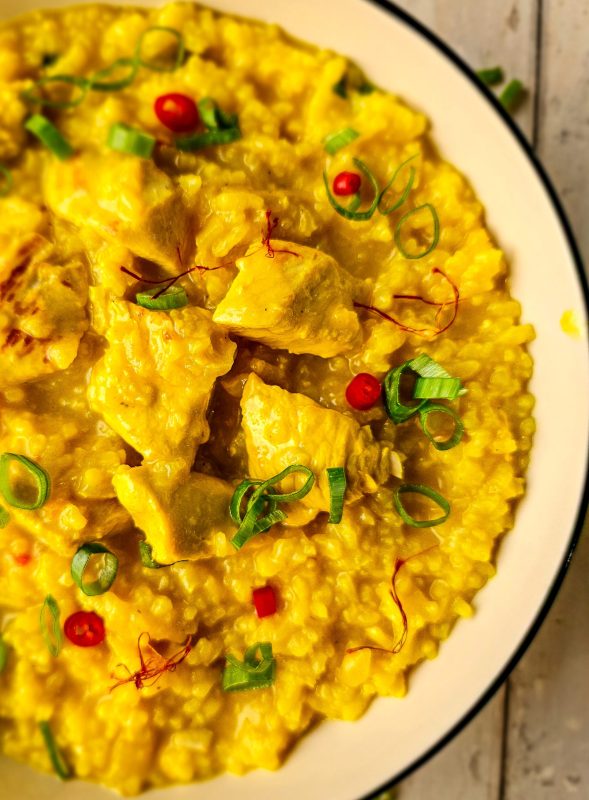
What Is Filipino Arroz Caldo?
Filipino Arroz Caldo combines rice and chicken cooked to form a thick, flavorful gruel. Key ingredients include ginger, garlic, and onions, with green onions and crispy toasted garlic on top for extra flavor.
Served hot or warm, Arroz Caldo is perfect for chilly weather or when someone feels under the weather. It’s a staple in Filipino households; people often enjoy it as breakfast, but it’s great at any time of the day.
Also, you can customize this dish. Add hard-boiled eggs, calamansi (Filipino lime), or a splash of fish sauce for different flavors. This dish offers warmth, comfort, and a taste of Filipino culture.
What are the historical origins of Filipino Arroz Caldo?
The origins of Filipino Arroz Caldo draw from centuries of foreign interactions. The dish’s name, ‘Arroz Caldo,’ which means ‘rice broth’ in Spanish, reflects Spain’s significant colonial influence over the Philippines for more than 300 years. Despite its Spanish name, the dish more closely resembles Chinese congee, a type of rice porridge.
The introduction of rice porridge to the Philippines can be traced back to early Chinese traders and immigrants who settled in the archipelago long before Spanish colonization. These Chinese settlers brought with them their culinary traditions, including congee. The locals then adapted it using available ingredients and local flavors.
As the dish evolved, it incorporated native Filipino ingredients and cooking techniques. For instance, the use of ginger, garlic, and fish sauce (patis) are distinctly Filipino touches that differentiate Arroz Caldo from its Chinese counterpart. The addition of safflower (kasubha) for color and flavor, and sometimes even annatto (atsuete), is another unique Filipino adaptation.
During the Spanish colonial period, the dish underwent further transformation. The Spanish influence is evident in the name and the occasional use of saffron, which was a prized spice in Spanish cuisine. However, local people substituted saffron with more accessible local ingredients like kasubha to achieve a similar color and flavor.
Filipino Arroz Caldo is a culinary representation of the Philippines’ historical interactions with Chinese and Spanish cultures. It stands as a testament to the country’s ability to absorb and adapt foreign influences, creating a unique Filipino dish while honoring its diverse heritage.
Essential Ingredients for Traditional Filipino Arroz Caldo
To create an authentic and flavorful Filipino Arroz Caldo, having the right ingredients is essential.
- Rice: you can use, glutinous rice (malagkit) for a thick and creamy texture, but you can use regular white rice also
- Chicken: use bone-in chicken pieces, such as legs and thighs, for their rich flavor, though boneless chicken can also be an option for easier eating
- Ginger: Fresh ginger is a crucial ingredient that gives Arroz Caldo its distinctive warm and slightly spicy taste
- Garlic: Sautéed garlic adds depth and aroma to the dish, enhancing its overall flavor profile
- Onion: use chopped onions to complement the ginger and garlic, adding another layer of savory goodness
- Fish Sauce: Known as patis in Filipino, this adds a unique umami flavor that’s characteristic of many Filipino dishes
- Chicken Broth: Using a rich chicken broth as the base is vital for that comforting, savory taste. Homemade broth is always best, but store-bought works well in a pinch
- Safflower (Kasubha): This optional ingredient adds a subtle aroma and a touch of color, sometimes used as a local alternative to saffron
- Calamansi/Lemon: Fresh calamansi juice or a squeeze of lemon adds a zesty brightness that cuts through the dish’s richness
- Green Onions: sprinkle finely chopped green onions on top for a fresh, vibrant finish
- Hard-boiled Eggs: use them as a garnish, as they add an extra layer of protein and texture
- Salt and Pepper: Essential seasonings to taste, ensuring the perfect balance of flavors.
Health Benefits of Filipino Arroz Caldo
The primary ingredients—rice, chicken, garlic, and ginger—come together to create a nourishing meal.
- Rich in Nutrients: The chicken in Arroz Caldo provides a good source of protein, essential for muscle repair and immune function. The garlic adds a boost with its antibacterial properties, which can be particularly helpful in warding off colds and infections. Ginger, a key ingredient, is known for its anti-inflammatory and digestive benefits, making it a remedy for nausea and indigestion.
- Easy to Digest: The porridge consistency of Arroz Caldo makes it easy on the stomach. It makes it an ideal meal for those who are recovering from illness or experiencing digestive issues. The soft, mushy rice is gentle and comforting, creating a soothing effect that’s easy to eat and digest.
- Hydrating and Warming: Arroz Caldo is typically served warm, which can help ease symptoms like sore throats and congestion. Additionally, the broth-like consistency ensures you get a good amount of liquids, aiding in hydration—crucial for overall health, especially when you’re sick.
Filipino Arroz Caldo vs. Chinese Congee: A Flavorful Comparison
Filipino Arroz Caldo and Chinese Congee look similar but taste very different. Both are popular rice porridges, yet they have unique ingredients, preparation methods, and cultural importance.
Arroz Caldo has a strong ginger flavor and often includes chicken. People garnish it with toasted garlic, scallions, and hard-boiled eggs. Condiments like calamansi or fish sauce add a tangy or savory taste.
Chinese Congee, or “zhou,” can include pork, fish, or century eggs. It has a milder flavor, focusing on the natural taste of the rice and ingredients. Common condiments are soy sauce, preserved vegetables, and pickles.
Arroz Caldo is a comforting breakfast dish, especially in cold weather or when someone feels sick. It is served hot with toppings and condiments on the side. Congee is more versatile and can be eaten any time of day, often with various side dishes.
Arroz Caldo holds special value in Filipino culture, linked to family gatherings and celebrations. It reflects Filipino values of care and community. Congee is a staple in Chinese culture, found in homes and restaurants. It adapts to different regional flavors and dietary needs.
In summary, Filipino Arroz Caldo and Chinese Congee are comforting rice porridges but have unique ingredients, flavors, and cultural significance. They highlight the rich culinary traditions of the Philippines and China.
Regional Variations of Filipino Arroz Caldo
Filipino Arroz Caldo is a beloved dish across the Philippines, with each region adding its unique twist. While rice, chicken, and ginger remain consistent, local preferences and ingredients vary.
In Luzon, especially in the north, Arroz Caldo often includes hard-boiled eggs and leeks. This version is thicker, making it a hearty choice for the colder climate. In Metro Manila, Arroz Caldo might include roasted garlic or saffron for a different flavor.
In the Visayan islands like Cebu and Iloilo, seafood like shrimp or squid is sometimes added. This version is generally thinner, making it easy to slurp.
In Mindanao, Arroz Caldo often features turmeric, imparting a golden hue and earthy flavors. Variations may include chorizo or beef tripes, reflecting the rich tastes preferred in the region.
Every variation of Arroz Caldo reflects the local culture, adding distinct character and story to this beloved Filipino dish.
Exploring the Cultural Significance of Filipino Arroz Caldo
Arroz Caldodo is more than just a meal; it’s a cultural icon in Filipino households. This comforting rice porridge, rich with chicken and ginger, serves as a family tradition and a source of warmth.
Many Filipino families enjoy Arroz Caldo on cold, rainy days or when someone feels sick. Its soothing broth and easy-to-digest ingredients make it a perfect comfort food. Grandmothers and mothers pass down their recipes, making each bowl a symbol of love and care, connecting families through generations.
It also appears during special occasions, from celebrations to solemn moments. Whether sharing a bowl during festive times or offering a hot meal to someone unwell, it highlights community and caring. Its flexibility with ingredients and budgets shows Filipino ingenuity and resilience.
This dish is widely beloved by Filipino emigrants globally. It is ranked as the 11th most favored ethnic cuisine in the United States.
Arroz CalCommon Mistakes to Avoid When Cooking Filipino
Cooking Filipino Arroz Caldo may seem easy, but mistakes can ruin your dish. Here are common pitfalls to avoid:
- Using the Wrong Rice Use short-grain or glutinous rice for a creamy texture. Long-grain rice won’t give the same consistency.
- Skipping the Sauté Sauté garlic, onion, and ginger first. This step builds a flavorful base and enhances the taste.
- Not Using Enough Liquid Add plenty of broth or water. The dish should have a porridge-like consistency and not be too dry.
- Ignoring Seasoning Adjustments Taste and adjust seasoning as you cook. A splash of fish sauce, lemon, or salt can elevate the flavor.
- Overcooking the Chicken Don’t overcook the chicken. Add it at the right time, cook until tender, then shred and return to the pot before serving.
- Skipping the Garnish Always garnish with chopped scallions, fried garlic, hard-boiled eggs, and lemon. These add texture and flavor.
- Cooking at the Wrong Temperature Cook on low to medium heat to prevent the rice from sticking or burning. This allows flavors to meld.
By avoiding these mistakes, you can make perfect Filipino Arroz Caldo every time.
Where to Find the Best Filipino Arroz Caldo in the Philippines
Finding the best Filipino Arroz Caldo can transform your culinary journey through the Philippines. Various regions offer unique twists on this comforting dish, giving you an opportunity to explore its diverse flavors. Here are some must-visit places to savor the best Filipino Arroz Caldo:
- Manila: The bustling capital city is home to numerous eateries and street food vendors like GoodAh!!! and Rodic’s Diner offering delicious, traditional Arroz Caldo that’s perfect for breakfast or a late-night snack.
- Cebu: Known for its rich culinary traditions, Cebu offers a heartwarming bowl of Arroz Caldo at local favorites like Larsian BBQ Market where you can enjoy it alongside a variety of grilled meats and seafood.
- Davao: In the southern part of the Philippines, Davao offers a unique taste of Arroz Caldo at places like Bulca Chong, recognized for its savory and flavorful broth that’s enhanced by locally sourced ingredients.
- Quezon City: A foodie haven in Metro Manila, Quezon City’s Gerry’s Jeepney serves a delightful version of Arroz Caldo that adds a twist with toppings like crispy garlic and fried tofu.
- Street Food Markets and Hawker Stalls: For an authentic experience, try Arroz Caldo from a street food market. Head to places like Mercato Centrale in Bonifacio Global City, Taguig. Vendors here passionately prepare this beloved dish using family recipes.
How to traditionally serve Filipino Arroz caldo?
People in Philipini traditionally serve Arroz caldo hot. It’s a perfect comfort food, especially in cold weather or when you’re feeling sick. Usually they ladle the dish into deep bowls to keep it warm longer.
Also, garnishing is a key part of serving Arroz caldo. Common toppings are chopped green onions, fried garlic bits, and a squeeze of calamansi (a small, tart citrus fruit from the Philippines). These garnishes add flavor and make the dish look better.
Another traditional accompaniment is a hard-boiled egg, which you can slice in half and place on top of the porridge. This addition provides extra protein and richness to the meal. This adds extra protein and richness to the meal.
Some versions of Arroz caldo include a dash of fish sauce or soy sauce for extra umami flavor. People usually serve these condiments on the side so each person can adjust the seasoning.
To complete the meal, Arroz caldo you can serve with a side of toasted bread or crackers. This provides a contrasting texture to the creamy porridge and you can use to scoop up the rice and broth.
How does Arroz Caldo compare to other traditional dishes?
Its name, which translates to ‘rice broth’ in Spanish, hints at its origins and the influence of Spanish colonization in the Philippines. However, Arroz Caldo has evolved to incorporate distinct Filipino flavors and ingredients, making it unique.
One of the closest comparisons to Arroz Caldo is the Chinese congee, a staple in many Asian countries. Both dishes are rice-based porridges, but Arroz Caldo typically includes chicken, ginger, garlic, and fish sauce, giving it a savory and aromatic profile that sets it apart from the more neutral-tasting congee. Additionally, Arroz Caldo is often garnished with hard-boiled eggs, scallions, and sometimes even fried garlic.
Another dish that shares similarities with Arroz Caldo is the Spanish arroz caldoso, a soupy rice dish. While arroz caldoso is more of a broth-based dish with a variety of seafood or meat, Arroz Caldo is thicker and more consistent porridge-like. The Filipino version also incorporates local ingredients such as calamansi (a type of citrus) and patis (fish sauce), which are not typically found in the Spanish counterpart.
In comparison to Japanese okayu, another rice porridge, Filipino dish is more robust in flavor. Okayu is often plain or lightly seasoned, sometimes served with pickled plums or fish. On the other hand, Arroz Caldo, is a full meal in itself, rich with the flavors of chicken, ginger, and garlic, and often served with a variety of toppings.
Another similar dish, Thai jok, is also a rice porridge but usually includes pork and is seasoned with soy sauce and fish sauce. While both jok and Arroz Caldo are hearty and comforting, the use of ginger and the specific Filipino seasonings give it a distinct taste that reflects its cultural heritage.
It shares elements with rice porridges worldwide, but its unique ingredients and flavors make it distinct.