What Is Bosnian Potato Pie (Krompiruša)?
Bosnian potato pie, called krompiruša, is a well-known savory pie in Bosnia and Herzegovina. It is part of the traditional Bosnian pite, which are hand-stretched pastry dishes filled with simple, hearty ingredients and baked until golden and fragrant.
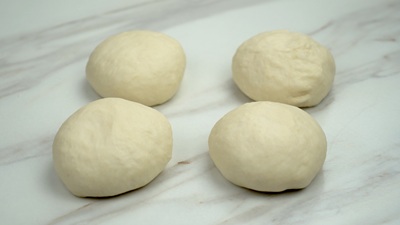
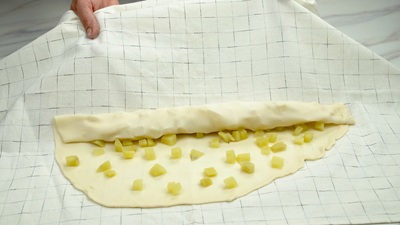
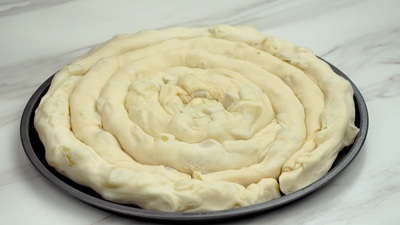
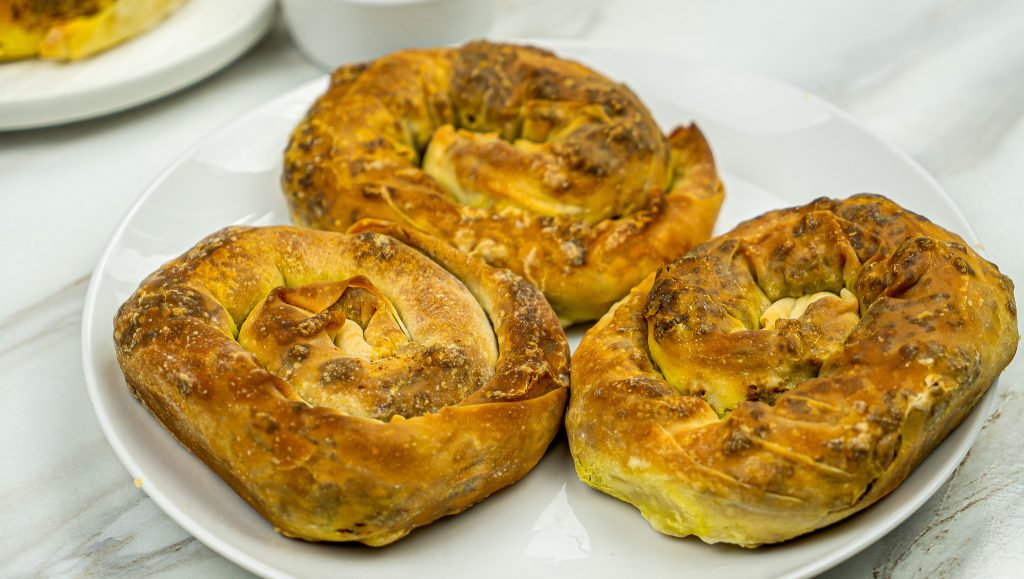
To make krompiruša, you use thin layers of homemade dough filled with a mixture of grated potatoes, onions, oil or butter, salt, and black pepper. First, you knead the dough until smooth and let it rest. Then, you stretch it carefully by hand until it is almost transparent. Next, you spread the potato filling evenly. After that, you roll or fold the dough into long coils and arrange them in a baking pan before baking until crisp and golden.
Unlike other Balkan pies that often contain cheese or meat, krompiruša is appreciated for its simple ingredients and comforting flavor, making it a common dish in everyday Bosnian cooking.
The Cultural Importance of Krompiruša in Bosnia
Krompiruša holds a special place in Bosnian households. It is not reserved only for holidays or celebrations but appears frequently at family lunches, dinners, and casual gatherings. For many, it is the taste of home—something eaten growing up, prepared by mothers and grandmothers, and shared around the table without ceremony.
The tradition of making pita is deeply communal. Dough stretching is often done by hand on large tables or cloths, and the process itself is a skill learned through observation rather than written recipes. In many homes, knowing how to stretch dough thin enough “to see through it” is a mark of culinary pride.
Today, krompiruša remains widely prepared in private homes, bakeries, and traditional restaurants, where it represents the essence of Bosnian comfort food.
Simple Ingredients That Define Bosnian Potato Pie
The beauty of krompiruša lies in its simplicity. Each ingredient plays a clear role in shaping its flavor and texture:
- Flour – forms the base of the elastic dough that can be stretched thin without tearing.
- Potatoes – the heart of the filling, providing body, moisture, and earthy flavor.
- Onions – add sweetness and depth once baked.
- Oil or butter – keeps the filling juicy and the pastry tender.
- Salt and black pepper – essential seasonings that bring balance and warmth.
- Water – used to bind the dough and help achieve the right elasticity.
Some households make small changes to the recipe. They might add a pinch of paprika, some garlic, or brush on a bit of water or oil before baking. However, the classic version stays simple and rustic.
How Bosnian Potato Pie Is Traditionally Shaped and Baked?
Bosnian potato pie can be shaped in a few traditional ways:
- Rolled (Savijena pita) – the dough is rolled into long coils and arranged in a spiral or rows inside the baking pan.
- Layered (Slagana pita) – dough and filling are layered in sheets, similar to lasagna.
- Folded (Zeljanica-style folding) – the dough is folded over the filling into long strips.
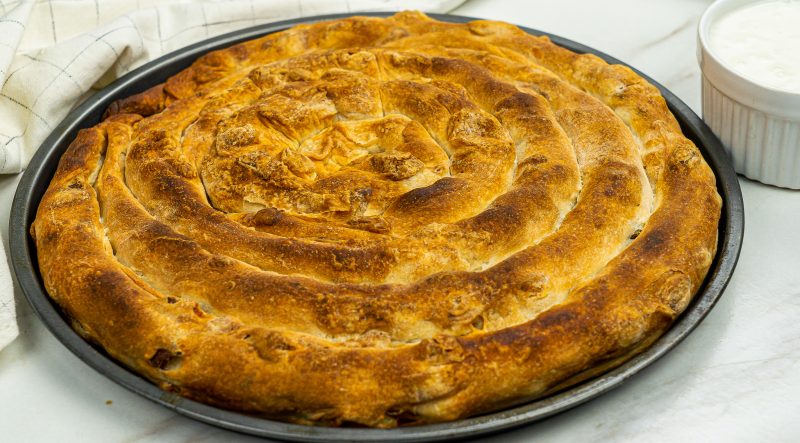
Regardless of shape, krompiruša is baked until the pastry turns golden brown and crisp on top while remaining soft and tender inside. After baking, it is often lightly sprinkled with water or brushed with oil, then covered briefly to soften the crust.
Serving Suggestions: Enjoying Bosnian Potato Pie at Its Best
Krompiruša is wonderfully versatile and can be enjoyed in many ways.
- As a Main Dish – Served warm and sliced into generous pieces, krompiruša is often paired with plain yogurt, kefir, or sour milk. This contrast of crisp pastry and cool dairy is a classic Bosnian combination.
- As a Light Meal or Snack – Smaller portions make krompiruša a perfect afternoon or evening snack. It is filling without being heavy, making it suitable at any time of day.
- For Guests and Gatherings – Cut into smaller squares, krompiruša works beautifully as part of a larger spread that includes other pies, salads, and pickled vegetables.
Drink Pairing for Bosnian Potato Pie
Traditional pairings include yogurt which cut through the richness of the pastry and balance the potatoes. Herbal teas or light, dry white wines also complement the dish without overpowering its delicate flavor.
Nutritional and Comfort Benefits of Bosnian Potato Pie
While undeniably comfort food, krompiruša offers several benefits when enjoyed in moderation:
- Sustained Energy – potatoes and dough provide complex carbohydrates that release energy slowly.
- Plant-Based Simplicity – krompiruša is naturally meat-free, making it suitable for vegetarian diets.
- Digestive Comfort – simple ingredients and gentle seasoning make it easy on the stomach.
- Emotional Nourishment – like many traditional dishes, krompiruša carries strong emotional value, offering warmth, familiarity, and a sense of belonging.
You can make lighter versions by using less oil or by replacing some of the white flour with whole wheat flour. This will not change the dish’s character.
Common Mistakes to Avoid When Making Bosnian Potato Pie
Even with simple ingredients, technique matters.
- Dough That Isn’t Rested – skipping rest time makes the dough elastic and hard to stretch.
- Dough Too Thick – thick dough results in a heavy pie instead of a delicate one.
- Overfilling – too much potato filling can prevent even cooking and cause sogginess.
- Watery Potatoes – potatoes with too much moisture should be lightly squeezed to avoid a wet filling.
- Underbaking – krompiruša should be fully baked until golden, not pale or doughy.
The History and Origins of Bosnian Potato Pie
Bosnian potato pie is deeply rooted in the everyday life and history of Bosnia and Herzegovina. Its origins lie in rural households, where families relied on simple, affordable ingredients to create filling meals. Potatoes, introduced to the region in the 18th and 19th centuries, quickly became a staple crop due to their ability to grow in varied climates and store well through the winter. Naturally, they found their way into traditional Bosnian pita.
The technique of making pita—stretching dough by hand until paper-thin—reflects centuries of Ottoman influence on Bosnian cuisine. However, krompiruša itself is a distinctly local adaptation. Unlike richer meat or cheese pies, it was shaped by practicality rather than luxury. With only potatoes, onions, oil, and dough, krompiruša could be made year-round, even in times of hardship, making it a reliable everyday dish.
Historically, Bosnian potato pie was not associated with celebrations or special occasions. Instead, it was part of daily family life, often served with yogurt or sour milk as a complete and nourishing meal. Its preparation varied slightly from region to region and from household to household, with techniques passed down through observation rather than written recipes.
Over time, krompiruša became more than just food. It came to symbolize resilience, home, and continuity. Today, this traditional Bosnian dish is commonly found in restaurants and bakeries, but its true essence comes from home kitchens. Simple ingredients, skilled cooks, and shared memories keep this dish alive.