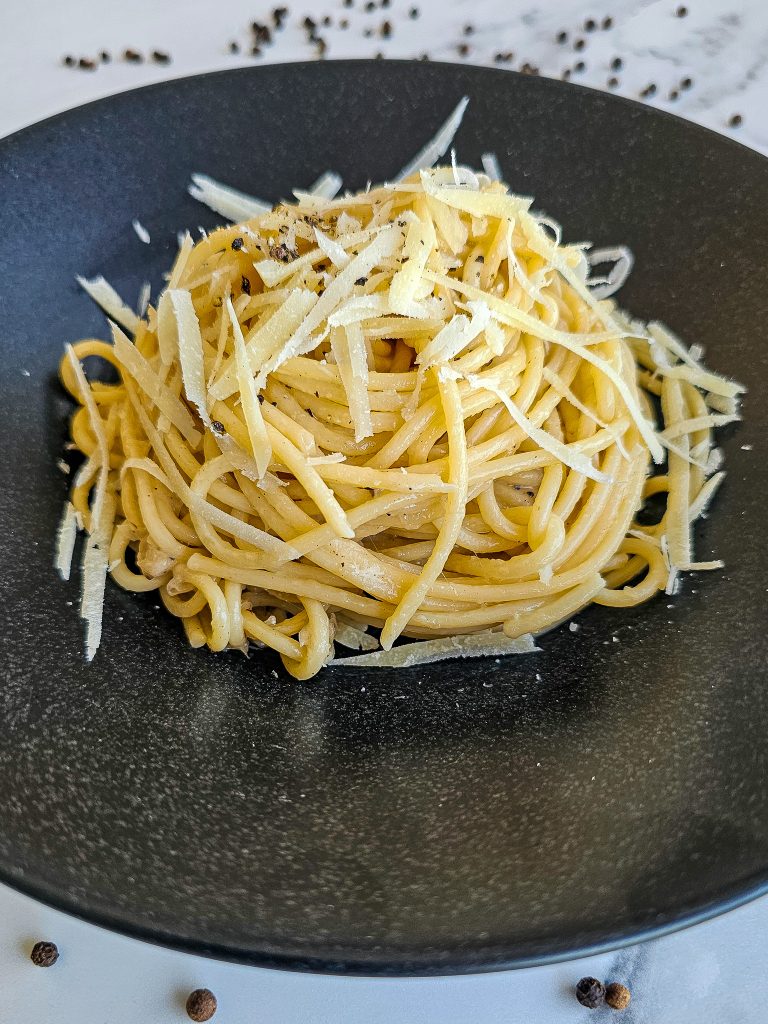


What Is Italian Pasta Alla Gricia?
Pasta Alla Gricia is a classic Roman dish known for its simple ingredients and rich flavors. It features guanciale, a type of cured pork cheek, which adds a savory depth. Pecorino Romano cheese gives it a sharp, salty taste, while black pepper adds a gentle, spicy warmth. Together, these ingredients create a delicious balance.
This dish comes from the Lazio region and predates both Carbonara and Amatriciana. It is often called “the white sauce” because it does not contain tomatoes, which became popular in Italian cooking later. Pasta Alla Gricia showcases traditional Roman cooking by highlighting the quality of each ingredient in a straightforward way.
What ingredients are used in Pasta Alla Gricia?
Pasta Alla Gricia is a delicious dish made with just four main ingredients. It creates a rich and strong flavor that many people love. At its heart, you’ll find:
- Pasta: Traditionally, rigatoni or spaghetti serves as the base, providing the perfect vehicle for the sauce to cling to.
- Guanciale: This cured pork cheek brings a savory depth and satisfying richness, offering a unique flavor distinct from bacon or pancetta.
- Pecorino Romano: A sharp and tangy cheese that adds creaminess while balancing the richness of the pork.
- Black Pepper: Freshly ground, this simple spice elevates the dish with a subtle heat, complementing the creamy cheese and guanciale.
These ingredients, when mixed with skill, create a dish that shows the simplicity and quality of Italian food.
Serving Secrets: How to Present Like an Italian
For an authentic Italian experience, serve Pasta Alla Gricia freshly cooked and steaming hot. The warmth boosts the flavors that define this classic dish.
- Use a Large Platter: Italians usually serve pasta on a large platter. This highlights the dish’s beauty and makes it easy to share.
- Heaping Portions: Plate generous portions of pasta. In addition, twirl the pasta naturally onto the plate to create rustic piles. These heaps should look good and be tasty to eat.
- Garnish with Pecorino: Add a final flourish with freshly grated Pecorino Romano. Also this enhances both the look and the flavor of the dish.
- Simplify Accompaniments: Pair with a fresh green salad or roasted seasonal vegetables.
- Serve with Italian Bread: Include crunchy Italian bread to soak up any sauce left on the plate.
Cooking Techniques: Achieving the Ideal Consistency
Make perfect Pasta Alla Gricia by balancing textures and flavors with a creamy sauce that complements the pasta:
- Cook pasta until just shy of al dente to allow for flavor absorption when combining with the sauce.
- Render guanciale fat carefully to make it crispy without burning, adding rich taste to the dish.
- Use reserved pasta water as an emulsifier; gradually add it to achieve a silky sauce texture.
- Toss pasta with pecorino romano and black pepper for even coating and flavor distribution.
- Ensure the pasta remains the highlight, supported by savory guanciale and cheesy pecorino undertones.
- Blend patiently and smoothly to reflect Italian chefs’ practices and achieve simple yet satisfying flavors.
How does Pasta Alla Gricia differ from Carbonara?
Pasta Alla Gricia and Carbonara are two popular dishes from Roman cuisine. However, they have one main difference: eggs. Pasta Alla Gricia is known as the “white carbonara” because it does not use eggs or cream. Instead, it highlights the flavors of guanciale, an Italian cured meat, and the Pecorino Romano cheese.
Also, this dish offers a lighter yet still rich pasta experience. The guanciale becomes crispy and adds its flavorful fat to the pasta, giving it a shiny appearance. In contrast, Carbonara includes egg yolks, which create a creamy sauce that coats each piece of pasta.
If you want a simple dish with clear Roman flavors, choose Pasta Alla Gricia. It features high-quality ingredients without extra complexity. On the other hand, Carbonara is richer and creamier due to the eggs, making it ideal for fans of creamy pastas. In conclusion, both dishes showcase the skill and tradition of Italian cooking.
What wines pair well with Pasta Alla Gricia?
Pairing wines with Pasta Alla Gricia involves complementing its rich and savory flavors. Guanciale’s salty, fatty profile and the sharpness of pecorino romano pair well with wines that enhance these qualities.
- Chianti: This classic Italian red wine has enough acidity to balance the richness of Pasta Alla Gricia. Its subtle fruit notes enhance the dish’s savory flavors. In addition, the tannins in Chianti offset the creaminess, leading to a satisfying finish.
- Pinot Grigio: If you like white wines, try a crisp Pinot Grigio. It is light and refreshing, helping to cleanse your palate. This way, the meal stays balanced and doesn’t overwhelm the pasta’s flavors.
- Barbera: Known for its bright acidity and low tannin structure, Barbera complements the dish’s complexity. In addition, its berry notes pair well with the salty and creamy aspects of the pasta.
Ultimately, choose a wine that suits your taste. Whether you opt for a bold red or a zesty white, the key is to achieve balance.
How does Pasta Alla Gricia compare to Cacio e Pepe?
When looking at Pasta Alla Gricia and Cacio e Pepe, their main differences are in the ingredients and flavor. Both dishes use simple ingredients, but Pasta Alla Gricia stands out with guanciale (cured pork cheek).
Guanciale makes Pasta Alla Gricia rich and savory. It complements the creamy Pecorino Romano cheese and the slight heat from black pepper. Cacio e Pepe focuses on the fresh black pepper and sharp Pecorino Romano, giving it bold peppery and cheesy flavors.
Pasta Alla Gricia has a mix of textures because the guanciale is crispy outside and tender inside. In comparison, Cacio e Pepe has a smooth, creamy sauce that covers the pasta and highlights the flavors of pepper and cheese.
If you want pasta with richer flavors, choose Pasta Alla Gricia. If you prefer a simple, peppery, and cheesy dish without meat, go for Cacio e Pepe.
What are common mistakes to avoid when making this pasta?
Making Pasta Alla Gricia seems simple with just a few ingredients, but avoid these mistakes for a delicious result:
- Choose the right pasta: Use rigatoni or other tubular pasta. The ridges hold the creamy sauce for full flavor in every bite.
- Cook pasta to al dente: Keep the pasta firm to hold the sauce well. Al dente pasta also allows a bit more cooking time with other ingredients.
- Save pasta water: Use starchy pasta water to create a creamy sauce. Mix it with cheese and guanciale fat for a rich, smooth texture.
- Focus on cheese: Use enough Pecorino Romano for the dish’s signature flavor. Gradually add the cheese so it melts smoothly without clumping.
- Crisp guanciale correctly: Start cooking guanciale in a cold pan. Render fat slowly to achieve crispy texture without burning it.
- Use fresh black pepper: Freshly cracked black pepper adds essential flavor. Avoid pre-ground pepper as it lacks the aromatic punch.
Follow these tips and stick to the traditional method—your dish will capture the authentic taste of Roman cuisine.
What are the origins of Pasta Alla Gricia in Italian cuisine?
Pasta Alla Gricia is a classic Roman dish and a precursor to Pasta Carbonara and Pasta Amatriciana. It originates from the Lazio region’s pastoral traditions of the 15th or 16th century, Shepherds used non-perishable ingredients to prepare hearty meals while tending their sheep.
It likely originated in the small village of Grisciano, near Amatrice in Lazio. This area was known for its rural lifestyle. Therefore the dish shows the simplicity and inventiveness of shepherds who used ingredients that were easy to transport and preserve.
The key ingredients of Pasta Alla Gricia—guanciale (cured pork cheek), Pecorino Romano cheese, black pepper, and pasta—were staples for shepherds. Guanciale provided a rich, savory flavor, while Pecorino Romano, a hard cheese made from sheep’s milk, added a sharp, salty taste. These ingredients were ideal for long journeys, as they did not spoil easily.
The name ‘Gricia’ is thought to derive from the word ‘gricio,’ which was a term used to describe bread and food sellers from the region of Abruzzo and Lazio who would travel to Rome. These vendors were known for selling basic foodstuffs, and their influence is reflected in the dish’s straightforward yet flavorful composition.
Pasta Alla Gricia’s enduring popularity is a testament to its simplicity and the quality of its ingredients. It remains a beloved dish in Roman trattorias and is celebrated for its authentic taste that captures the essence of traditional Italian cooking. Its origins highlight the ingenuity of rural Italian communities and their ability to create delicious meals from humble beginnings.
How does Pasta Alla Gricia compare to similar pasta dishes in other cuisines?
When comparing Pasta Alla Gricia to similar pasta dishes from other cuisines, it’s clear that Gricia focuses on a few quality ingredients and strong flavors. In French cuisine, pasta often features creamy sauces and various herbs. American pasta usually relies on heavy tomato-based sauces or a mix of meats and vegetables. Gricia, however, highlights the quality of just a few ingredients, letting each one stand out.
In Asian cuisines, dishes like Japanese udon or Chinese lo mein often use soy-based sauces with different vegetables and proteins. These dishes focus on umami and sweetness, which contrasts with the salty, savory taste of Pasta Alla Gricia. The Italian dish uses cured pork and aged cheese to create a unique flavor that is different from the soy and ginger flavors found in many Asian pasta dishes.
Mediterranean cuisines, like Greek or Turkish, might include pasta dishes with olive oil, lemon, and fresh herbs, which offer a lighter, citrusy taste. In contrast, Pasta Alla Gricia stays true to its Roman roots. It highlights the richness of guanciale and the sharpness of Pecorino Romano, creating a hearty meal without needing extra ingredients like lemon or herbs.