

What Is Caprese Salad?
Caprese Salad is a classic Italian dish that showcases the fresh flavors of its ingredients. It is a classic Italian dish, particularly popular in the summer when tomatoes are fresh and in season.
It is made with thick slices of ripe tomatoes, creamy buffalo mozzarella, and fragrant fresh basil leaves. The salad is typically drizzled with extra virgin olive oil and sometimes balsamic glaze.
Caprese Salad focuses on combining just a few elements to create something delightful. Therefore, each bite balances textures and flavors, making it a favorite in Italian appetizers. You can prepare it in minutes, and it leaves a lasting impression with its fresh and bright taste.
How To Serve Caprese Salad
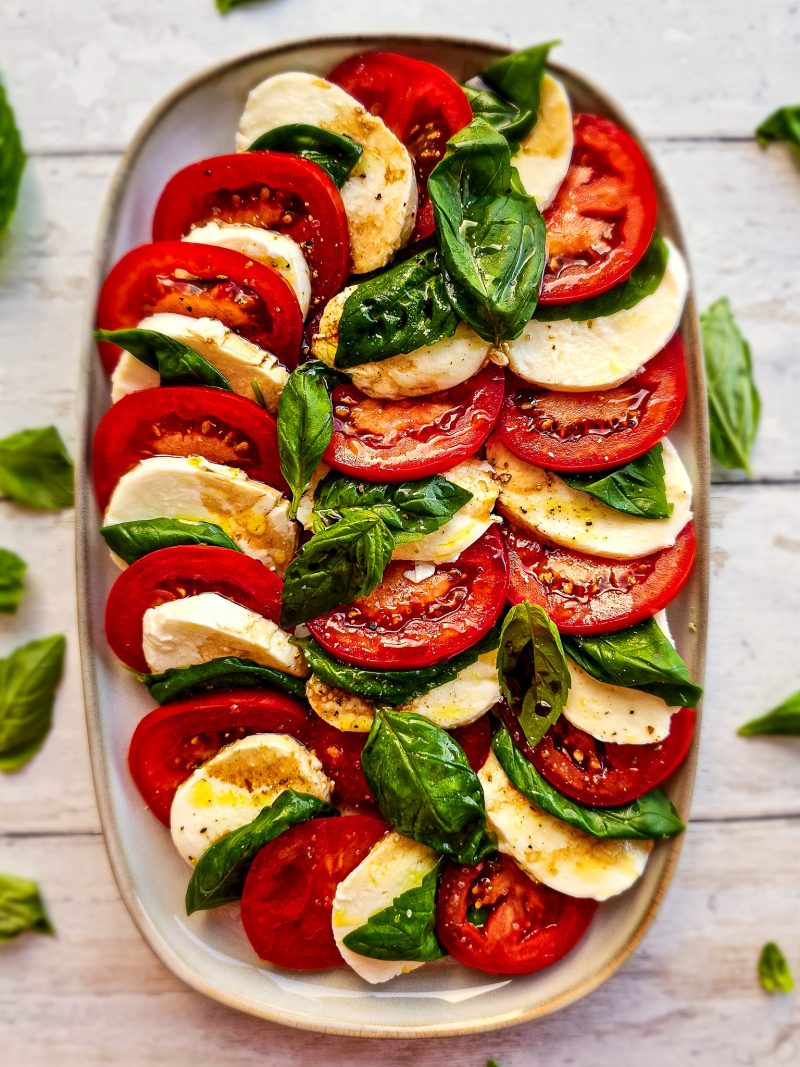
To serve Caprese Salad like an Italian chef, focus on the presentation. Choose a platter or white plate that highlights the vibrant colors of the tomatoes, mozzarella, and basil.
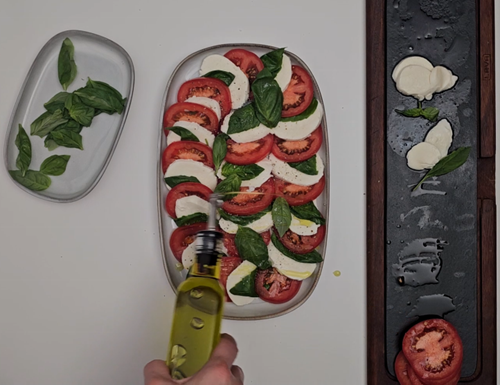
Use a layering technique. Alternate slices of fresh tomatoes with mozzarella. Make them similar in size for consistency. Tuck fresh basil leaves between them. This method not only looks good but also mixes the flavors perfectly.
Also, drizzle olive oil over the salad with a flourish. Choose high-quality extra virgin olive oil for added depth. Lightly season with sea salt. You can also add freshly cracked black pepper or a drizzle of balsamic glaze for sweetness.
Serve the Caprese Salad at room temperature. This keeps the mozzarella soft, the tomatoes juicy, and the basil aromatic.
Presentation tips: Garnish with whole basil leaves in the center for extra fragrance and appeal. For special occasions, serve individual portions to give each guest a unique dining experience.
Caprese Salad Around the World: A Taste of Global Variations
Caprese Salad is a classic Italian dish that has variations all around the world. It is one of the top 10 most popular Italian dishes globally and appears on 85% of menus at Italian restaurants around the world.
When comparing Caprese Salad to similar dishes in other countries, one of the most notable differences is its minimalism. Many other salads around the world incorporate a wider variety of ingredients and dressings.
For example, the Greek salad includes feta cheese, olives, cucumbers, and onions, often dressed with a mix of olive oil, lemon juice, and herbs, creating a more complex flavor profile.
Similarly, in France, there is a popular dish called ‘Salade de Tomates et Mozzarella.’ This dish often includes extra ingredients like pine nuts or arugula. Also, chèvre (goat cheese) often replaces mozzarella, adding a tangy flavor.
Likewise, the Spanish version might use jamón serrano for a savory enhancement.
In the Middle East, the Fattoush salad presents yet another variation. This salad features mixed greens, tomatoes, cucumbers, radishes, and crunchy pita bread. It is mixed with a tangy sumac dressing. The use of bread and unique spices in Fattoush gives it a different take on salads, focusing on texture and flavor.
Across the ocean, in the United States, Caprese Salad transforms into a fulfilling meal with grilled chicken or avocado slices, reflecting an American penchant for adding protein to salads.
In Mexico, a zesty lime vinaigrette replaces balsamic glaze, offering a refreshing taste. In Japan, sesame seeds and soy sauce add an umami-rich profile to Caprese Salad.
These adaptations highlight Caprese Salad’s versatility and global creativity in honoring its origins. Each variant presents a new way to enjoy tomatoes, cheese, and fresh herbs.
Crafting the Perfect Caprese: Ingredients and Techniques
Making a Caprese salad starts with selecting fresh, high-quality ingredients. Firstly, the secret to elevating this dish lies in your technique.
- Tomatoes: Choose ripe, juicy Roma tomatoes with vibrant color. Slice them evenly so their natural sweetness stands out.
- Mozzarella: Opt for fresh, creamy buffalo mozzarella. Slice it to match your tomato slices for consistent texture.
- Basil: Go for fresh basil leaves. Tear them gently or leave them whole to layer between the cheese and tomatoes for added fragrance.
Drizzle olive oil generously over your salad for richness that unites the ingredients. Also, add a little sea salt and black pepper to enhance the flavors of the tomatoes and cheese. If you like a touch of acidity, a light drizzle of balsamic glaze can deepen the taste.
Exploring the Regional Twists on Traditional Caprese Salad
Italy’s diverse regions have introduced their own creative spins on this beloved dish. Each reinterpretation retains the essence of the salad, yet adds a unique flair.
In Campania, where this dish is said to have originated, the focus remains on using local buffalo mozzarella, known for its creamy texture and depth of flavor.
Moving up north to Liguria, you may find a Caprese Salad incorporating pesto, a nod to the region’s prized basil pesto sauce, which adds a rich, herbal depth to the salad.
In parts of Tuscany, seafood elements such as anchovies are occasionally layered within the salad, adding a savory edge that complements the ripeness of the tomatoes.
On the other hand, Sicilian versions, sometimes include capers or olives, infusing the dish with a briny, Mediterranean twist.
Outside of Italy, chefs around the world have adopted and adapted Caprese Salad according to their culinary landscapes. For instance, you might encounter a Caprese with avocados in California or infused with a drizzle of lemongrass vinaigrette in Southeast Asian inspired variations.
Nutritional Benefits of the Classic Caprese Salad
The Mediterranean diet helps lower the risk of heart disease by 25%. This diet includes dishes like Caprese salad.
Caprese salad offers a delicious blend of taste and nutrition. At its core, the juicy tomato provides antioxidants like lycopene. Lycopene can help reduce risks of heart disease and cancer while also improving skin health by guarding against UV rays.
Basil adds vibrant flavor and essential nutrients like vitamin K, manganese, and magnesium, which support bone health and metabolism.
Next, mozzarella brings protein and calcium, crucial for muscle and bone health. Choosing buffalo mozzarella may give you a bit more calcium.
Don’t overlook the olive oil drizzle. It contains healthy monounsaturated fats that not only boost vitamin absorption but also improve heart health by reducing inflammation and balancing cholesterol levels.
A touch of balsamic glaze adds sweetness and more antioxidants, making Caprese salad an all-around healthy choice. With these ingredients, this classic dish refreshes and supports a healthy lifestyle.
How does Caprese salad differ from Greek salad?
Both come from Mediterranean roots and offer refreshing tastes, each with its own distinct touch.
Ingredients and Flavors: A Caprese salad combines just a few main ingredients: ripe tomatoes, fresh basil, buffalo mozzarella, and olive oil. This simple mix relies on the quality of each ingredient to provide a fresh taste. Meanwhile, a Greek salad boasts a stronger flavor with tomatoes, cucumbers, kalamata olives, red onions, and feta cheese. Often, it includes oregano and a splash of olive oil with red wine vinegar.
Presentation: You typically see Caprese salad arranged in alternating slices of tomato and mozzarella, topped with basil. This setup not only looks appealing but also ensures balanced flavors in every bite. In contrast, a Greek salad mixes ingredients together, creating a colorful dish where each bite offers a variety of textures and tastes.
Culinary Uses: Caprese salad often works as a standalone appetizer or a light summer dish, showcasing simplicity and elegance. Greek salad, with its hearty ingredients, can serve as a starter, side, or even a main course for lighter meals, thanks to its bold flavors.
Both salads beautifully represent their cultures—Caprese with its Italian flair and Greek with its vibrant rustic style.
What are some common mistakes to avoid when making Caprese salad?
Making Caprese salad might seem straightforward, but a few missteps can easily alter its taste and visual appeal. Here are some common mistakes to avoid:
- Overlooking the freshness of the ingredients. To authentically capture the essence of Caprese, always opt for the freshest tomatoes and basil. Fresh mozzarella is equally vital—avoid pre-packaged options that lack the creamy texture of authentic buffalo mozzarella.
- Slicing the ingredients unevenly. Tomato and mozzarella slices should be uniform in thickness to ensure a balanced bite every time.
- Overloading on basil. While it’s tempting to add more basil, moderation is key to maintain a harmonious blend of flavors.
- Over-seasoning with salt. A small pinch of sea salt is enough to enhance the natural flavors without overpowering them.
- Using excessive balsamic vinegar. Some people use balsamic vinegar excessively, which can overshadow the dish’s delicate balance. A light drizzle of balsamic glaze provides the right hint of sweetness and acidity.
- Serving the salad straight from the refrigerator. For the best experience, allow all ingredients to reach room temperature before assembling and serving the salad. This ensures that each element of the Caprese is tasted in its full glory.
What is the historical origin of Caprese Salad in Italian cuisine?
The Caprese Salad, or ‘Insalata Caprese,‘ is a simple yet iconic dish that embodies the essence of Italian cuisine. Its origins are deeply rooted in the island of Capri, located in the Campania region of Italy. This dish is celebrated for its fresh ingredients and vibrant colors, which mirror the Italian flag: green, white, and red.
Caprese Salad’s origins are a bit mysterious, but many believe it first appeared in the early 20th century. One popular story says Italians created it after World War I as a patriotic dish. It used fresh tomatoes, mozzarella cheese, and basil to represent the colors of the Italian flag. According to this, it first appeared at Trattoria Torre Saracena in Anacapri during the 1920s.
Another theory posits that the Caprese Salad was first served at the Quisisana Hotel in Capri during the 1920s. It was reportedly a favorite of King Farouk of Egypt, who requested a light meal that would not weigh him down. The simplicity and elegance of the dish quickly gained popularity among locals and tourists alike.
Whatever the case is, Caprese Salad it symbolizes Italian pride and culinary heritage. It reflects Italy’s significant role in global cuisine.