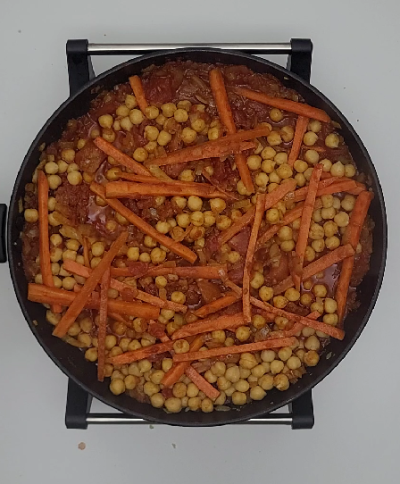
What Is Moroccan Chickpea Stew?
Moroccan Chickpea Stew is a flavorful, comforting dish made with chickpeas, vegetables, and warm spices. Chickpeas are a staple in Moroccan cooking, and in this stew they’re simmered with ingredients like carrots, potatoes, and tomatoes. The result is a hearty, plant-based meal that’s perfect for vegetarians, vegans, or anyone who enjoys wholesome food.
The stew derives its rich flavor from spices such as cumin, paprika, cinnamon, and sometimes harissa, adding a touch of heat. It’s easy to make, flexible enough to adjust to your preferences, and always packed with protein, fiber, and nourishment.
In Morocco, families often serve this stew with fresh bread or couscous, especially during Ramadan, when it’s shared to break the fast. Recipes are often passed down through generations, with each family adding their own twist. That’s what makes every bowl of Moroccan Chickpea Stew both unique and rooted in tradition.
Traditional Ingredients In Moroccan Chickpea Stew
Central to this stew are the chickpeas, known for their creamy texture and protein-rich content.
Key Spices:
- Cinnamon
- Cumin
- Turmeric
- Paprika
- Coriander
- Harissa paste (for a subtle kick)
Chickpea Stew is flavorful because of its warm, earthy spices. These spices give the dish a rich taste and a delightful smell.
Aromatic Vegetables:
- Onion
- Garlic
- Sweet bell peppers
- Carrots
- Butternut squash
These vegetables provide a savory depth, natural sweetness, and varied textures to the stew.
Tomatoes:
- Canned tomatoes or tomato sauce
- Tomato paste (for enhanced flavor)
Tomatoes offer acidity and a touch of umami to balance the spices, contributing to a richer flavor.
Herbs:
- Fresh cilantro
- Fresh parsley
These are often used as garnishes for a fresh taste and a colorful presentation.
When you combine these ingredients, they create a delicious stew that showcases the rich cooking traditions of Morocco.
Health Benefits Of Moroccan Chickpea Stew
This tasty stew includes various nutritious ingredients that each bring their own health perks.
- High in Fiber: Moroccan Chickpea Stew is rich in fiber from chickpeas, aiding digestion and promoting satiety for weight control.
- Packed with Essential Nutrients: The stew is loaded with protein, iron, magnesium, and potassium from chickpeas and vegetables, providing vitamins A, C, and B.
- Fights Inflammation: Turmeric and cumin help reduce inflammation, potentially lowering the risk of chronic diseases.
- Strengthens Immunity: Garlic and tomatoes enhance immunity. Garlic combats infections while tomatoes provide antioxidant-rich Vitamin C.
- Good for the Heart: Chickpeas and olive oil support heart health, as they are low in saturated fat and cholesterol.
Therefore, incorporating it into your diet adds new flavors and offers a nutritious option for overall health.
How To Serve Moroccan Chickpea Stew: Tips And Tricks
- Always serve the stew warm to ensure enhanced flavors and a comforting meal
- Garnish with freshly chopped cilantro or parsley to add a pop of color and freshness.
- A squeeze of lemon juice right before serving brightens the dish, balancing the hearty spices with a zesty kick.
- Finally, for extra heat, add a side of harissa or another spicy condiment to elevate the flavor complexity.
Perfect Side Dishes To Complement Moroccan Chickpea Stew
Here are some traditional and innovative pairings to try:
- Couscous: A staple in Moroccan cuisine, couscous offers a light, fluffy texture that complements the hearty stew. Moreover, for added flavor, consider infusing the couscous with saffron or turmeric.
- Quinoa: For a gluten-free alternative, quinoa is an excellent choice. Its nutty undertone pairs well with the spice profile of the stew.
- Rice: Serve the stew over a bed of basmati or jasmine rice. These aromatic rice varieties add an extra layer of fragrance to the dish.
- Flatbreads: Moroccan flatbreads, such as khobz or msemen, are perfect for scooping up the stew. Also, their soft and chewy texture adds to the culinary experience.
- Roasted Vegetables: Pair the stew with roasted carrots, zucchini, or eggplant. These vegetables echo the flavors found within the stew but offer a delightful contrasting texture.
- Salad: A simple salad with fresh greens, cucumber, tomato, and a light vinaigrette can provide a refreshing balance to the rich and savory stew.
Common Mistakes To Avoid When Cooking Moroccan Chickpea Stew
Diving into the rich flavors of Moroccan Chickpea Stew can sometimes come with challenges. By avoiding these pitfalls, your stew will be perfectly balanced and delicious every time.
- Toast Your Spices First: Toasting spices before adding them to the stew enhances their aroma and deepens their taste. Skipping this step leads to a flat flavor profile.
- Choose Fresh Ingredients: Use fresh vegetables and properly cooked chickpeas to avoid a dull and uninspired stew.
- Cook Chickpeas Just Right: Aim for chickpeas that are tender but still hold their shape. Overcooked chickpeas turn mushy and lose texture.
- Don’t Skip the Citrus: Lemon juice cuts through the stew’s richness. A splash of fresh lemon brightens the flavors.
- Balance Sweet and Savory: Add ingredients like currants or dried apricots for a sweet counterpoint to savory spices. Also, they keep the dish authentic and layered.
- Let It Simmer: Simmering allows flavors to meld perfectly. Be patient to achieve a deep, complex flavor.
- Add Fresh Herbs Last: Fresh cilantro or parsley added before serving brings freshness to the dish. Don’t skip this for final flavor complexity.
What are the regional variations of Moroccan Chickpea Stew within Morocco?
Each area in Morocco adds its own touch to the traditional recipe, showcasing local tastes and ingredients.
- Coastal Regions: In cities like Essaouira and Agadir, people make stew with fresh seafood. This gives the dish a salty flavor from the Atlantic Ocean.
- The Atlas Mountains: Hearty root vegetables, such as turnips and parsnips, are common here. They use mountain herbs like thyme and rosemary for extra flavor.
- Desert Areas: In regions near the Sahara, strong spices like cumin and turmeric are popular. Dried fruits sometimes add a hint of sweetness.
- Urban Variations: In cities like Marrakech and Casablanca, markets offer different versions of dishes using modern ingredients, like bell peppers and zucchini.
What is the historical background of Moroccan Chickpea Stew?
Moroccan Chickpea Stew’s history is diverse and fascinating, reflecting the many cultures that have influenced Moroccan cuisine. The dish originated with the Berber people of North Africa, who used ingredients like chickpeas, grains, and aromatic spices.
As Morocco became a key location for traders, the stew evolved with contributions from Arabs, Moors, and Europeans. Also, Arab traders introduced essential spices that define the stew’s vibrant flavor, such as cumin, coriander, and paprika—a nod to the broader Middle Eastern culinary tradition.
The Ottomans brought new cooking methods and ingredients that blended with local traditions. When people from Andalusia moved to Morocco, they added even more flavors to the cuisine. This combination is especially seen in dishes like Moroccan Chickpea Stew.
Today, this stew is a symbol of comfort and is often enjoyed at family gatherings and special celebrations. Its history shows the various influences that shape Moroccan culture, including Berber heritage, Arab traditions, and Mediterranean connections.
How does Moroccan Chickpea Stew differ from similar dishes in other cuisines?
Moroccan Chickpea Stew is famous for its delicious and aromatic flavors, thanks to a special mix of spices that are typical in Moroccan cooking. In other words, this unique combination really sets it apart from similar dishes from other cultures.
- On the other hand, Indian Chana Masala has a stronger, spicier taste. It’s made with chickpeas cooked in a thick tomato sauce along with ingredients like ginger, garlic, and onions. Also, fresh cilantro and sometimes green chili peppers add a refreshing kick to the dish.
- Middle Eastern chickpea dishes, such as Lebanese stew, often use ingredients like lemon juice and olive oil, along with fresh herbs like parsley and cilantro. These stews tend to have a brighter, more citrusy flavor compared to the deeper, spicier notes of the Moroccan version.
- Spanish chickpea stews, like Cocido Madrileño, usually include meats such as chorizo or ham and are heartier. They focus more on the rich flavors from the meat rather than relying on spices. This makes them quite different from the vegetarian Moroccan Chickpea Stew.
- In Mediterranean cooking, chickpea stews might have ingredients like tomatoes, olives, and feta cheese, giving them a tangy and savory taste. These versions are generally lighter and highlight the natural flavors of the vegetables and legumes, instead of the complex spice blends found in Moroccan dishes.